


History
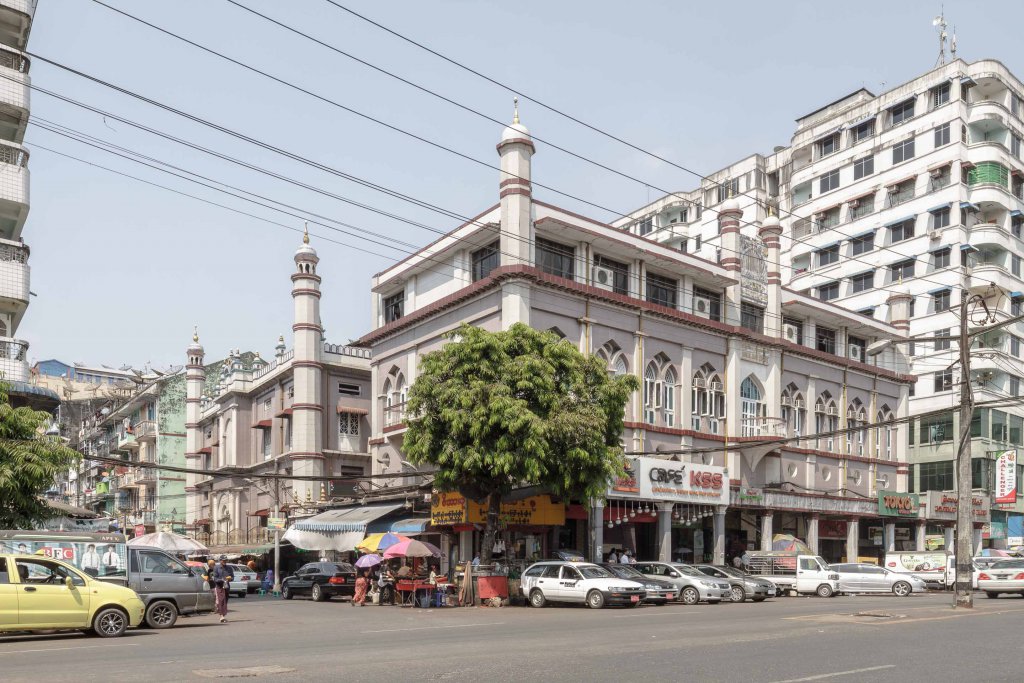
The Cholia Jamay Mosque, situated on the corner of Bo Sun Pet Street and Mahabandoola Road, began as a simple timber mosque in 1856. The first masonry structure was built in 1872, but the current grand edifice was erected in 1936. The term “Cholia” traces its origins to the ancient Chola kingdom of South India, denoting Muslims whose mother tongue is Tamil. These Tamil Muslim traders have a long-standing history of traversing the Bay of Bengal, established long before Western colonization, and have since become an integral part of Yangon’s cultural tapestry.
Architecture & Construction
The current mosque was built in 1936 by the renowned firm AC Martin & Co. The fact that an Armenian architect’s firm built one of the city’s central mosques is a brilliant example of Yangon’s cosmopolitan fabric. A distinctive plaque at the top of the building identifies the mosque in four languages: Arabic, Tamil, Burmese, and English. Upon entering, visitors can see large fish swimming in the courtyard pond. Historically, the mosque’s private wells were a vital resource for the neighborhood during water shortages in the colonial era.
Culture & Charity
Beyond its role as a place of worship, the Cholia Muslim Religious Fund Trust operates a variety of charitable initiatives. These include assisting the elderly and the poor within the community, as well as offering educational and health awareness programs. While predominantly run by the Tamil Muslim community, the mosque warmly welcomes all Sunni Muslims for prayers. This enduring spirit of charity and inclusivity highlights the mosque’s vital role in the social welfare of downtown Yangon.
Transportation & Tips
- Location: 114 Bo Sun Pet Street (Corner of Mahabandoola Road), Pabedan Township.
- Transportation: Centrally located and highly accessible on foot or by taxi while exploring downtown.
- Food Tip: The lassi shop located between the mosque entrance and the corner is a highly recommended pit stop for a refreshing drink during your city tour.
- Visitor Tips: Modest attire is required. Visitors are encouraged to observe the tranquil atmosphere and the unique multilingual signage that defines this historic site.