


History
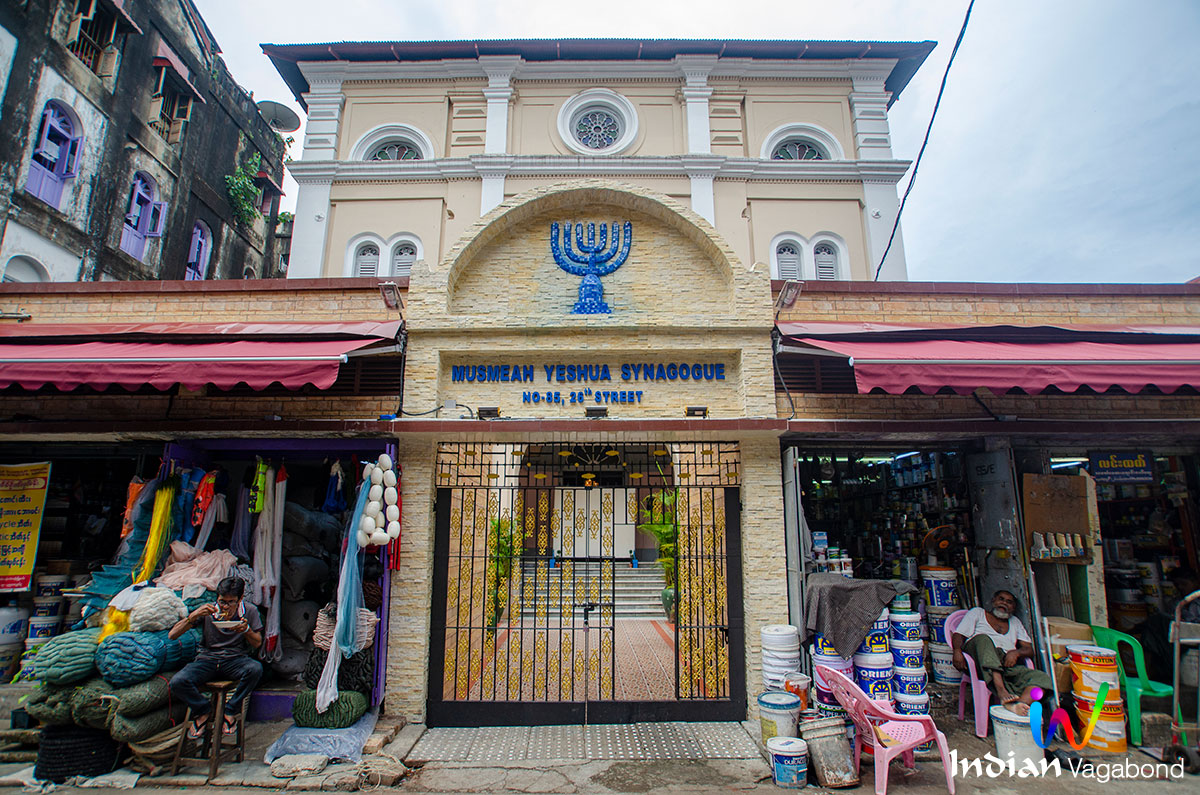
The Musmeah Yeshua Synagogue, located on 26th Street in Latha Township, is the only remaining Jewish house of worship in Myanmar. Originally built as a small wooden structure in 1854, the current masonry building was constructed between 1893 and 1896. During the mid-19th century, colonial Rangoon was home to a thriving community of nearly 2,500 Sephardic Jews from Baghdad and Bene Israel Jews from India. Many members of this community rose to prominence as influential merchants and civic leaders, contributing significantly to the city’s commercial and administrative growth.
Architecture & Arts
The synagogue’s architecture bears a striking resemblance to the Beth El Synagogue in Kolkata, though it is more intimate in scale. Inside, the high-ceilinged hall creates a majestic atmosphere for prayer. Two original Torah scrolls are still carefully preserved within the sanctuary. A unique aspect of its location is its situation amidst paint and hardware shops owned by Indian Muslim traders; this proximity serves as a powerful symbol of the inter-religious harmony that has long defined Yangon’s diverse neighborhoods.
Culture & Current Status
The Jewish population in Myanmar declined sharply following the Japanese occupation in 1941 and the subsequent formation of the State of Israel. Today, only about 20 Jewish citizens remain in Yangon. Although the community lacks the “Minyan” (a quorum of ten adult males) required for a full traditional service, the synagogue remains active through visits from expatriates and tourists. Despite having no resident Rabbi since 1969, the synagogue is meticulously preserved and stands as a poignant reminder of a once-thriving community and a popular destination for heritage travelers.
Transportation & Tips
- Location: No. 85, 26th Street, Latha Township, Yangon.
- Transportation: Located in the heart of downtown, it is easily reachable on foot or by taxi from nearby landmarks like Sule Pagoda or the central markets.
- Visitor Tips: The synagogue is generally open daily except Sundays. It is best to arrive before noon as it often closes in the afternoon. While there is no entry fee, donations for the maintenance of this historic building are welcomed. Please be respectful of the sacred nature of the site during your visit.