


History
The Guangdong Guanyin Temple traces its roots back to 1823, established by Chinese immigrants from the Canton (Guangzhou) region. Although a major fire in 1855 destroyed its early records, the temple was rebuilt and reopened in 1868, as commemorated by a historic stele listing its donors. Situated in the heart of Latha Township, it serves as a spiritual anchor for Yangon’s ethnic Chinese community, numbering over 150,000. It remains one of the city’s most significant cultural hubs, witnessing the long-standing history of the Chinese diaspora in Myanmar.
Architecture & Belief
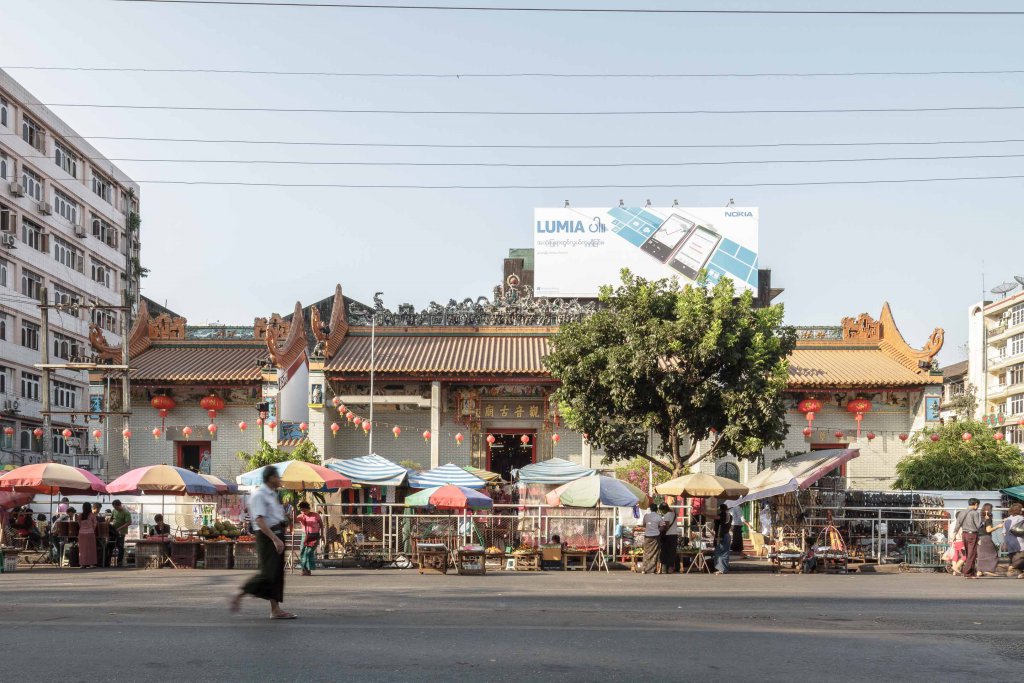
Dedicated to Guanyin, the Bodhisattva of Compassion, the temple features a vibrant interior with multiple rows of altars leading to the main shrine. The altars are adorned with detailed mythological scenes, and the central statue of Guanyin is surrounded by magnificent golden carvings. Unlike the nearby Kheng Hock Keong, this temple has a more street-integrated layout, with its front steps often merging with the bustling life of the surrounding market. Smaller shrines also honor other Bodhisattvas, including the future Buddha, Maitreya.
Vibrant Surroundings
The area surrounding the temple is a sensory delight, teeming with vendors selling garlic-fried crabs, dim sum, and traditional Cantonese-style sausages. While the nearby 19th Street is famous for its evening BBQ, local insiders recommend the legendary fish rice congee on 20th Street, located right beside the temple. This vibrant street food culture, paired with the spiritual presence of the temple, creates the unique and inspiring atmosphere that defines Yangon’s Chinatown.
Transportation & Tips
- Location: 668 Mahabandoola Road (Corner of 20th Street), Latha Township, Yangon.
- Transportation: Extremely accessible on foot for those exploring Chinatown or by taxi from any downtown location.
- Visitor Tips: Visit in the late afternoon to experience the transition from a place of quiet prayer to the energetic bustle of the evening food market. As with all religious sites, modest attire is requested. Don’t miss the chance to try authentic local snacks while soaking in the historic ambiance of the city’s oldest Chinese quarter.