


History
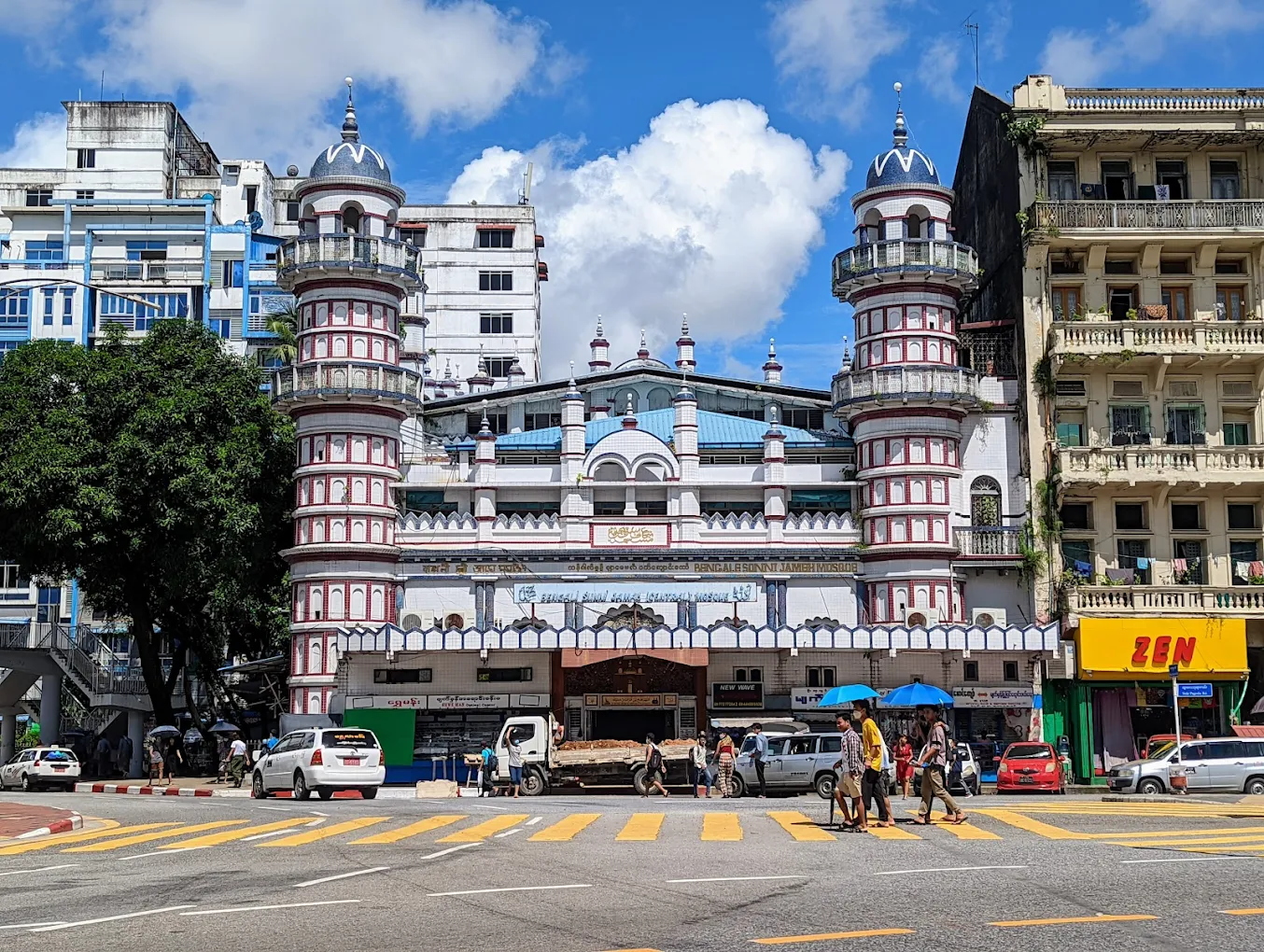
Due to its central location, the Bengali Sunni Jameh Mosque is one of Yangon’s largest and most popular Islamic landmarks. Built in the 19th century, with some records dating back to an earlier structure in 1862, it was founded by immigrants from East Bengal (modern-day Bangladesh) and Calcutta. Over the decades, it has evolved into a significant religious site for the local Muslim community, standing as a historical testament to the diverse migrant history that shaped Yangon’s urban fabric.
Architecture & Arts
The mosque’s facade is beautifully adorned with colorful tiles, and its towering minarets overlook the central roundabout next to the Sule Pagoda. As an active place of worship, the building is frequently refurbished and well-maintained. Adjacent to the main prayer hall is a madrasa that offers religious courses, Arabic language classes, and other educational programs, serving as a hub for both spiritual and intellectual growth within the community.
Culture & Harmony
Harmonious inter-religious relations have long been one of Yangon’s defining and inspiring features. Despite occasional periods of tension across the region, the Bengali mosque remains a symbol of faith and resilience in the heart of the city. Its proximity to pagodas and churches exemplifies the peaceful coexistence that characterizes downtown Yangon, where diverse communities continue to live and worship side-by-side in a spirit of mutual respect and understanding.
Transportation & Tips
- Location: 93 Sule Pagoda Road, Kyauktada Township, conveniently located near the Sule Pagoda.
- Transportation: Extremely accessible via public transport or on foot from any downtown landmark.
- Visitor Tips: Visitors should dress modestly, covering shoulders and knees. As it is a sacred space with frequent prayer sessions, silence is appreciated, and guests are encouraged to be mindful of religious customs while on the premises.