


History
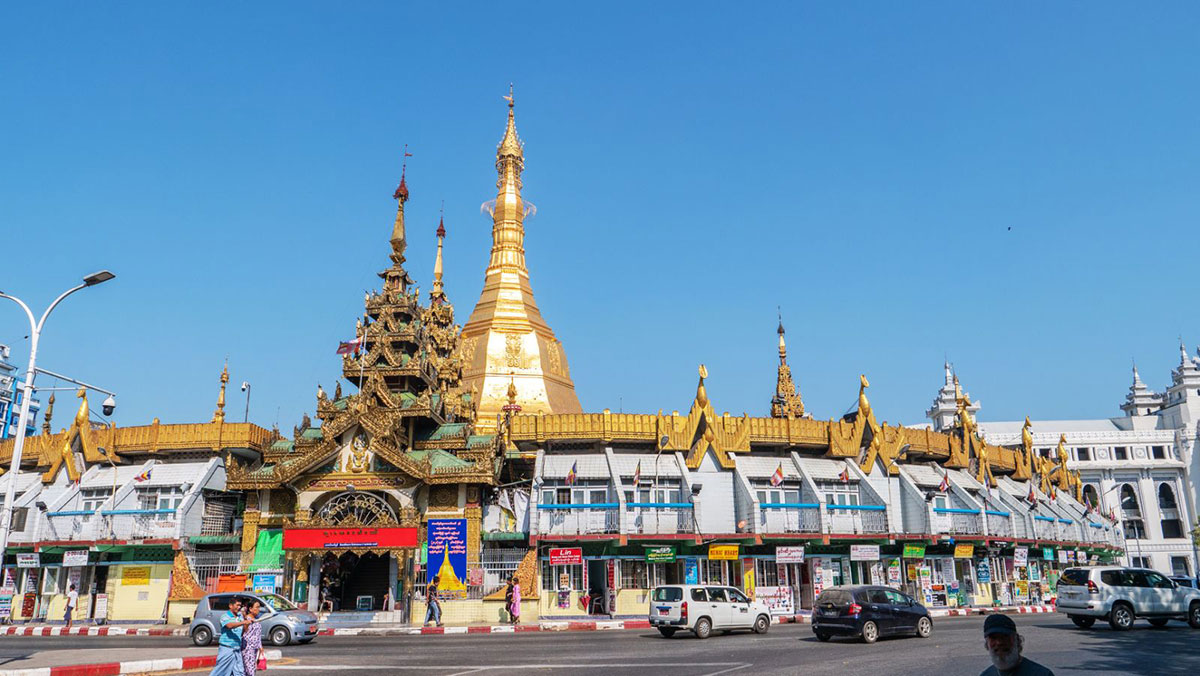
Sule Pagoda is contemporary with the Shwedagon Pagoda, dating back over 2,500 years. The name “Sule” is believed to be derived from “Su-wei” (meaning “meeting”), the spot where King Ukkalāpa and his ministers assembled to discuss the enshrinement of the Buddha’s relics. Another theory suggests it comes from the Pali word “Cula-ceti” (meaning “smaller pagoda”) in comparison to the “Maha-ceti” (Shwedagon). During the colonial era, the pagoda was saved from demolition due to a petition by U Chan Tun, a Cambridge-educated lawyer, and it remains a resilient symbol of Myanmar’s heritage despite being bombed during WWII.
Architecture & Arts
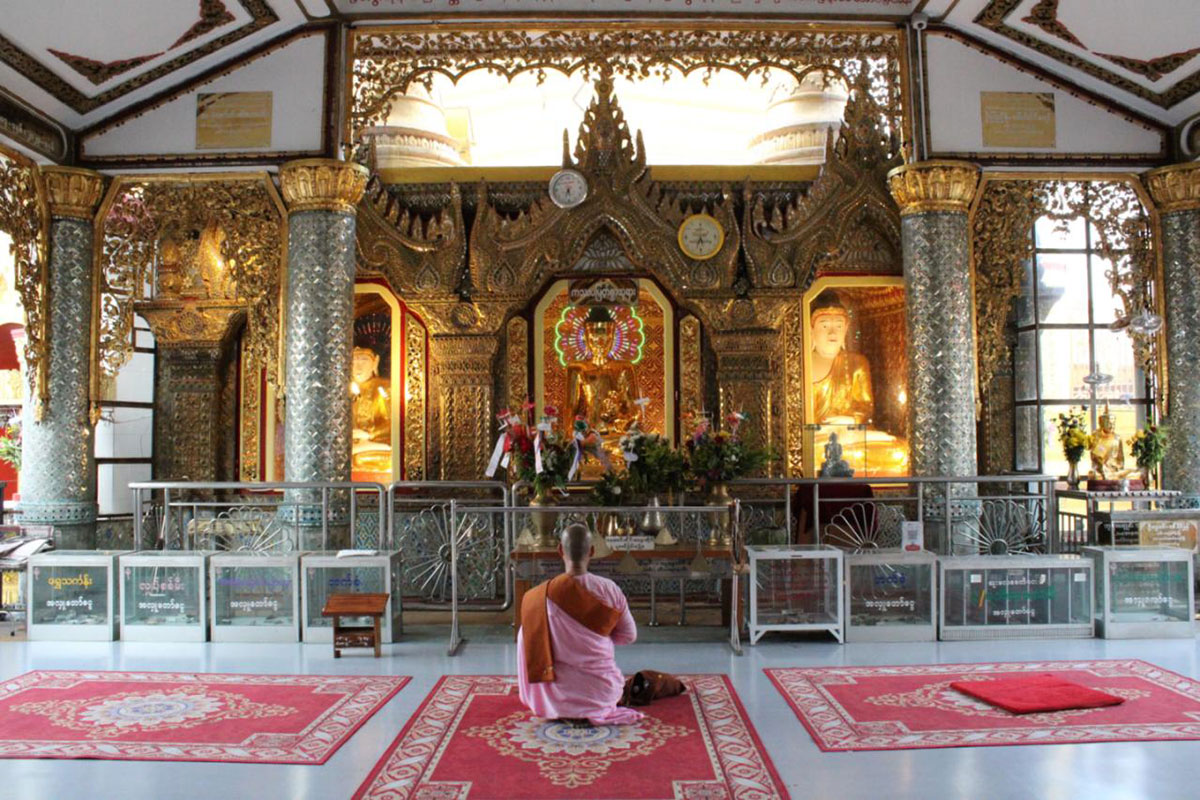
Standing at 151 feet, the gilded pagoda features a unique octagonal shape from the base to the banana bud, representing the Noble Eightfold Path. The four main shrines house the images of the four Buddhas of this world cycle: Kakusandha (East), Konagamana (South), Kassapa (West), and Gotama (North). Notable features include the statue of Ven. Upagutta, an ancient well said to be the oldest in Yangon, and the shrine of Sule Bo Bo Gyi (Guardian Deity), whose finger points toward the Shwedagon Pagoda hill.
Culture & Lifestyle
As a central landmark, Sule Pagoda is a vibrant hub of religious and social activity. On weekends, the platform is congested with devotees offering flowers, telling rosary beads, and pouring water over Buddha images. The surrounding area offers a striking contrast where spiritual peace meets urban life—featuring the Yangon City Hall, Maha Bandoola Park with the Independence Pillar, and modern skyscrapers jutting into the sky.
Transportation & Tips
• Location: At the major intersection of downtown Yangon.
• Transportation: Accessible via almost all YBS bus lines as it is a major transit hub. It is also a 10-minute walk from Yangon Central Railway Station.
• Dress Code: Modest attire covering shoulders and knees is required. Shoes and socks must be removed before entering the platform.
• Insider Tip: Enter through the northern entrance to see the historic well and Ven. Upagutta statue. Walking clockwise around the platform is the traditional way to experience the pagoda’s diverse shrines.