

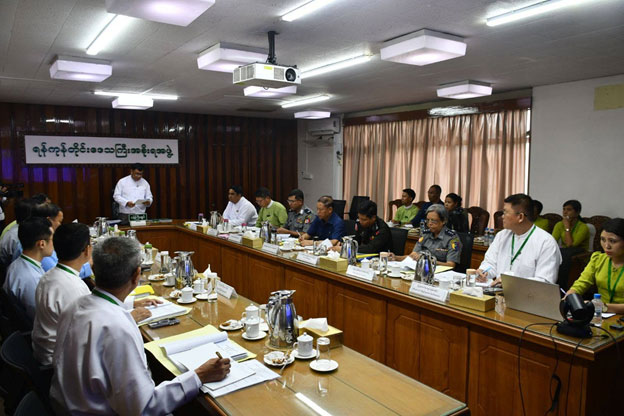
YANGON, July 22 — The Yangon Regional Tourism Executive Committee held its 2/2026 meeting today. The meeting was attended by Committee Chairman and Chief Minister of Yangon Region U Aung Naing Thu, Committee Vice-Chairman and Minister for Rakhine Ethnic Affairs U Nay Min Tun, Committee Secretary and Director of the Yangon Region Directorate of Hotels and Tourism U Nanda Aung, alongside committee members including officials from related departments, tourism experts, and representatives from hotel and tourism associations.
During his opening speech, the Chairman, U Aung Naing Thu emphasized that Yangon Region serves as the primary gateway to Myanmar, highlighting the need for high-quality services to ensure satisfaction for visitors entering under various visa categories. He noted that a total of 149,884 foreign tourists visited Yangon Region during the first six months of 2026 (January to June)—averaging around 25,000 visitors per month—with 30 percent entering on tourist visas. He stressed the importance of systematically shaping services to encourage longer stays and increased spending. To achieve this, he called for collaboration with relevant departments to preserve famous pagodas, historical heritage sites, and colonial buildings, as well as to upgrade public restrooms and waste management systems. Furthermore, he noted that new itineraries—including Community-Based Tourism (CBT), Agritourism, and rural lifestyle tours—can be developed in townships such as Hlegu, Taikkyi, Twantay, and Thanlyin through cooperation with Destination Management Organizations (DMOs) and local administrative bodies. He added that hotel and hospitality training courses are continuously being conducted in the region, while efforts are underway to update the www.travelyangon.com website and the Yangon Tourist Map to provide accurate information.
During the meeting, the committee approved two hotel construction permits, six hotel operating licenses totaling 564 rooms, and 86 travel agency licenses (56 In-bound and 30 Out-bound). These approvals created job opportunities for 532 youths—188 in the hotel sector and 344 in the travel industry.